
Tree Felling Cycle & Restoration Planting.
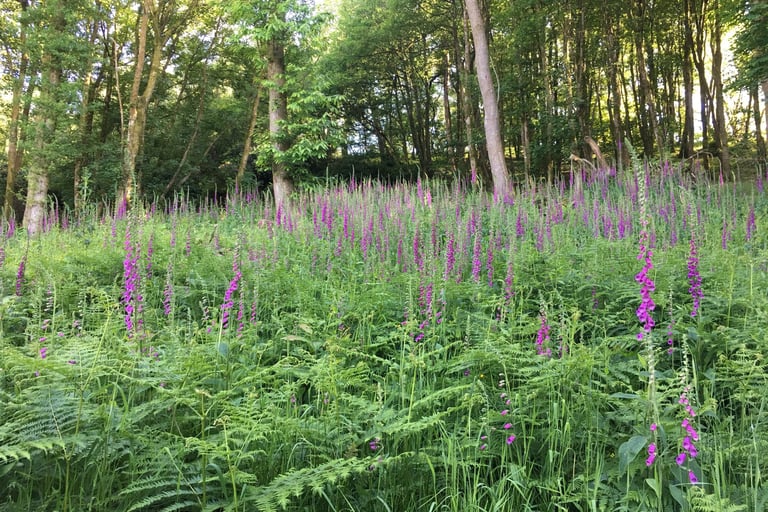
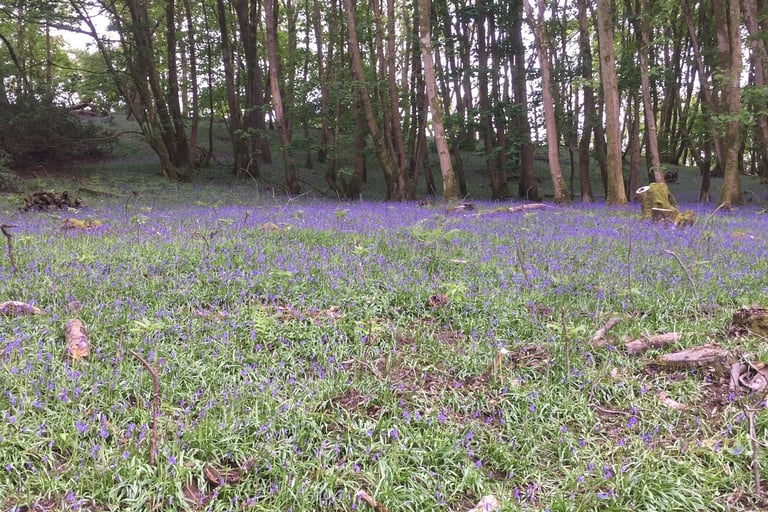
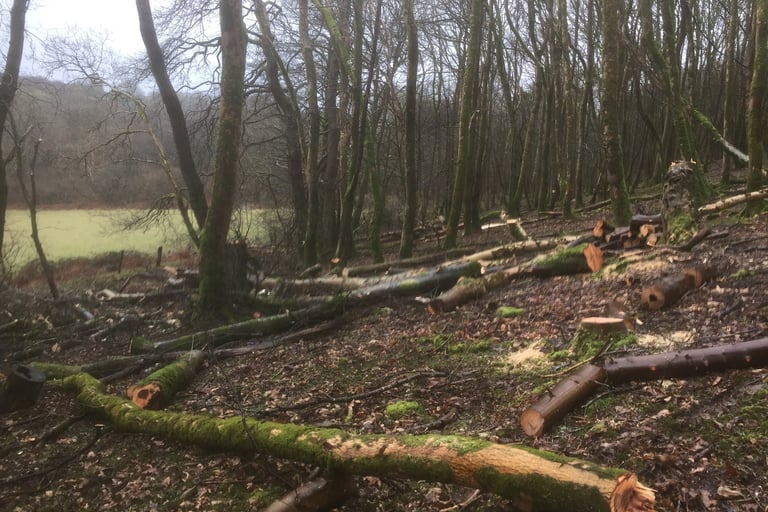
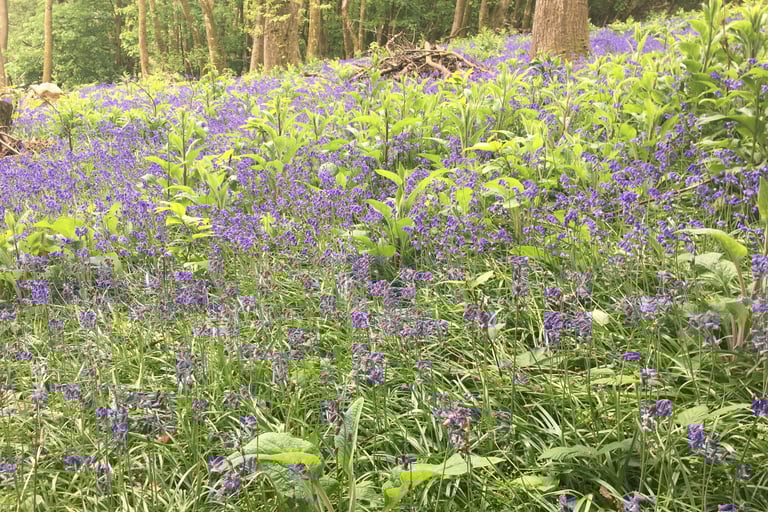
Woodland management enables a continual cycle of healthy tree growth. Within the multi generational cycles of tree crops, tree felling is an essential process, often appearing brutal and unsympathetic to the landscape. However done proportionally within a whole woodland it can be a beneficial process for wildlife and the trees themselves. Allowing light to the forest floor creates an explosion of life. It is a time-tested process that supports the natural environment and generates a renewable, sustainable resource.
How Much Felling
Our approach is to selectively fell small parcels of land around 1-2 acres a year. Often leaving a few mature trees while opening up the forest floor. Through a combination of coppicing (allowing cut trees to re-grow with multiple stems), re-planting and natural regeneration re-generate this section of woodland.
Reactive felling
There are times where we select specific trees within the wider woodland for reactive or specific purposes. For example we react to Ash dieback disease once it becomes acute and fell these dead tress. While we fell a lot more Ash trees than we ever wanted due to the disease there are some healthy specimens appearing unaffected. These sentinel trees could be the keys to disease resistance. Through minimal and specific felling we believe there is a better chance of preserving some of our Ash trees.


Cheriton Woods
Creating ecological havens for wildlife and humans.
Cheriton Woods Barn
Cheriton Woods
Kyfts Lane
Llanmadoc
Gower
Swansea
SA3 1DB
Cheritonwoods@gmail.com
07725894591